The Bradford Evaluation Framework

Welcome to The Bradford Evaluation Framework

Our team have spent the last decade working in collaboration with the Better Start Bradford programme, as well as the Reducing Inequalities in City programme, to deliver evaluations of community based services for families delivered in Bradford. We have worked closely with local authority, health and voluntary sector partners to understand how to effectively integrate research into real world practice. Using our learning from this work, we have developed a framework with tools and resources to guide commissioners, service deliverers, and researchers through the process of embedding evaluation into the design and implementation of services. 

The framework provides the basis of robust, effective evaluation that can improve the evidence base for services, inform commissioning and funding decisions, and ensure services better meet the needs of communities and stakeholders.

What does the framework offer?

All of the resources shared here have been tried and tested with small voluntary sector organisations as well as larger statutory services, in real world settings working with diverse communities. The framework offers a detailed structure to the service design, monitoring and evaluation processes while also providing flexibility in the way it can be applied.

We provide concise explanations, how-to guides, example documents, and templates that move from identifying the need for a service, through service design, monitoring implementation, to presenting evaluation findings. Following the whole process will allow you to:

  • Decide what to deliver – including identifying evidence-based interventions, considering community readiness and developing a Theory of Change
  • Design the service – including bringing together a service design group, developing a logic model and mapping the service process
  • Plan your evaluation – including developing the right questions and embedding appropriate consent procedures, data collection and sharing 
  • Monitor implementation – including identifying meaningful performance indicators and realistic targets 
  • Deliver a robust evaluation report and build your evidence base
  • Interpret the findings and recommendations of evaluations

Why do we think you should use this framework?

We often know what we want to achieve, but we don’t always know the best way to get there. A consistent approach to evaluation that can be applied across services at all levels helps us to be sure we are delivering the right services to the right people and the right time.

Evaluation should be considered from the start:

Planning evaluation as part of the design of your service means you will have agreed your questions in advance and have the data you need to answer them. Retro-fitted evaluations and/or those left until the end of delivery are likely to be poor quality and limit what you will be able to find out.

Good quality evaluation is always achievable

If planned from the start with input from key stakeholders, delivering a high quality evaluation should always be a realistic prospect. Understanding what is being delivered and to who, is the foundation of evidencing ‘what works’. This framework can set you up with simple guides to achieve evaluation success.

Understanding what works

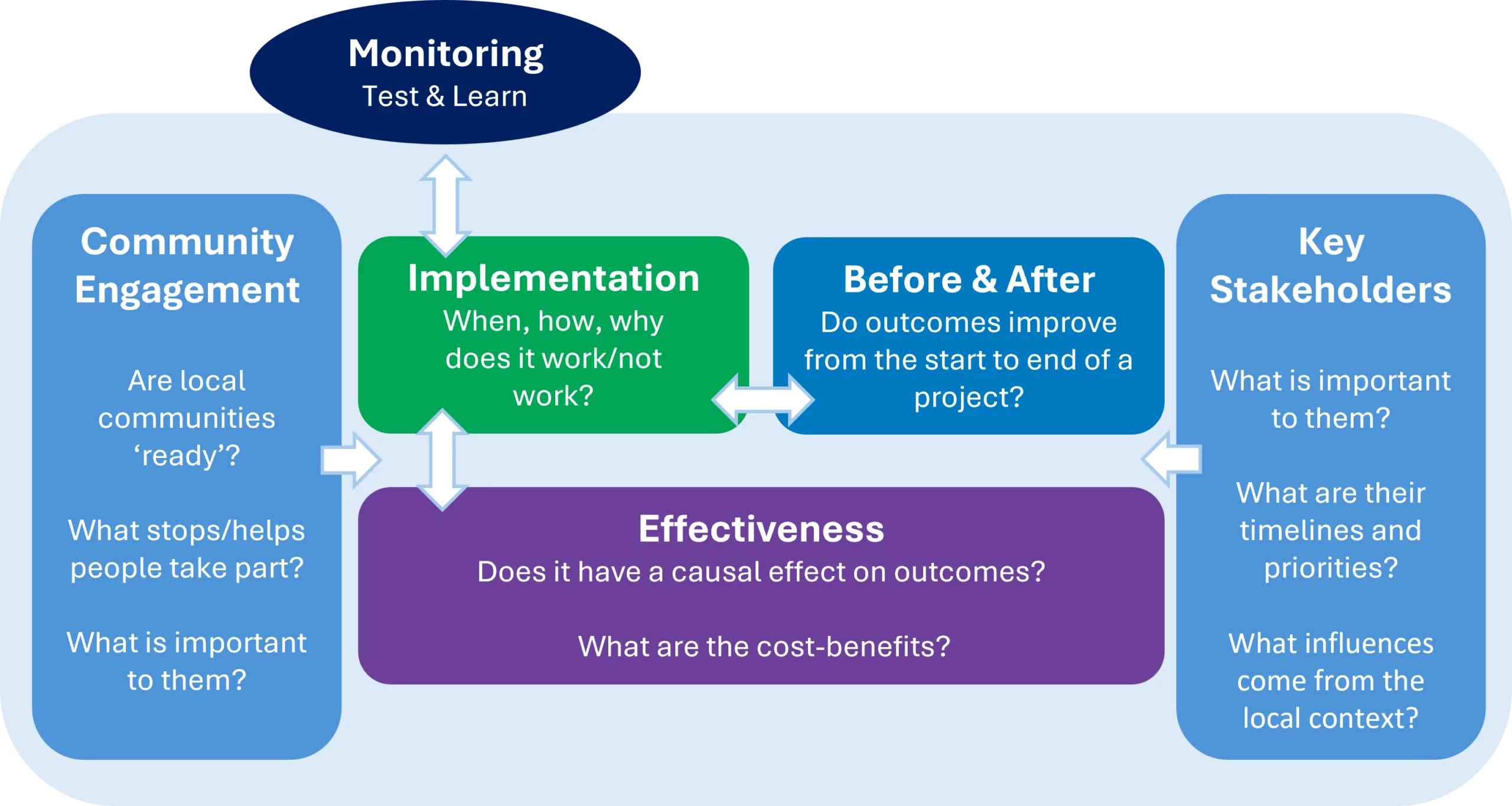
Effective services are ones that:

  • engage the right people at the right time
  • are delivered as intended with fidelity to the model
  • have a positive impact on outcomes

Evaluations that focus only on outcomes won’t tell you what works for your community.  

Focus on nudging up the evidence

Creating a strong evidence base starts with having a clear blue print (Logic Model) for your service. This framework allows you to develop this foundation, and build from understanding implementation towards measuring impact on short and long term outcomes.  

Evidence based doesn’t mean it will ‘work’ in your context

Delivering evidence based services increases the likelihood of improving outcomes, but what works in one place might not work somewhere else.

It’s important to understand if a service can be delivered and reach the right people in your local context.